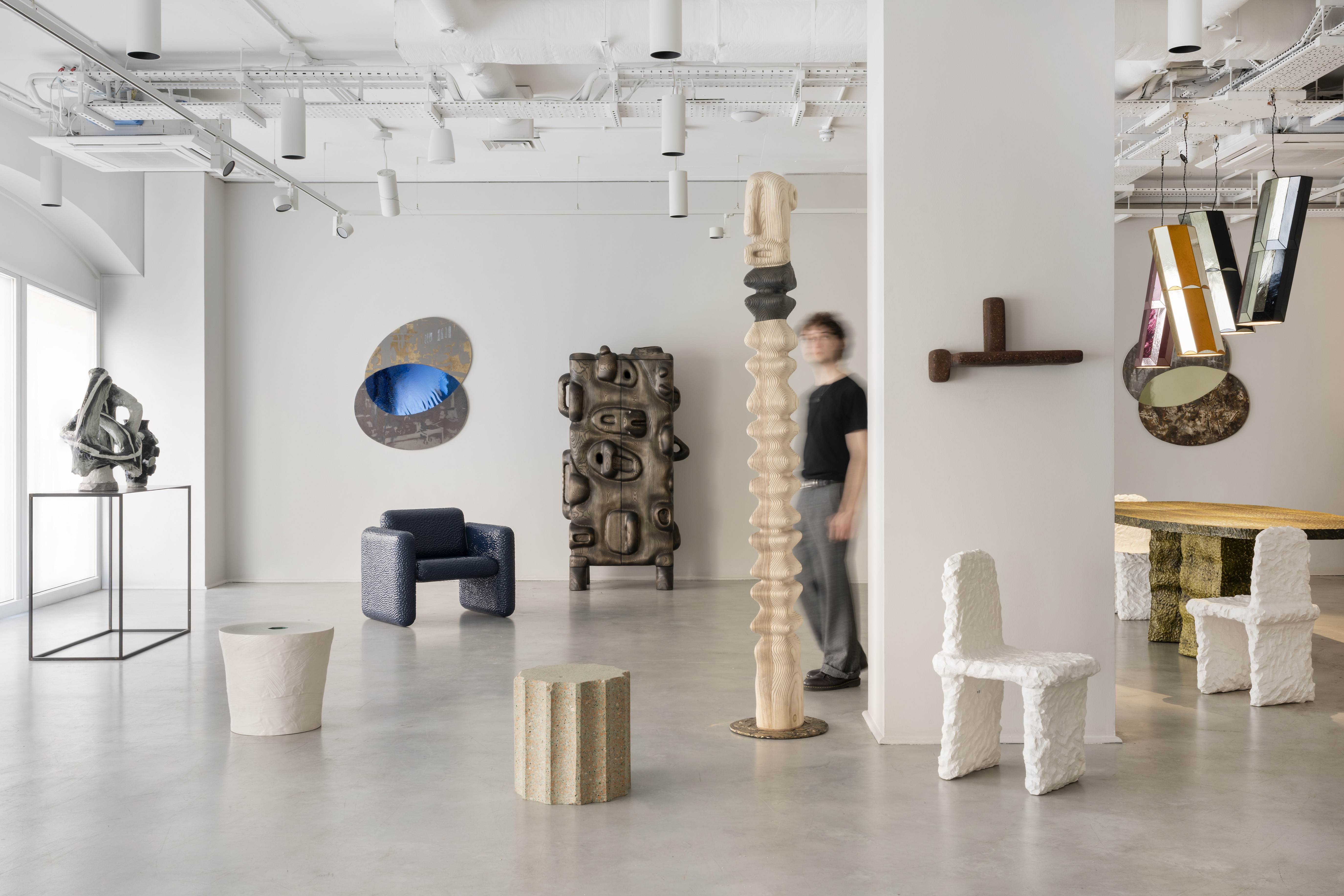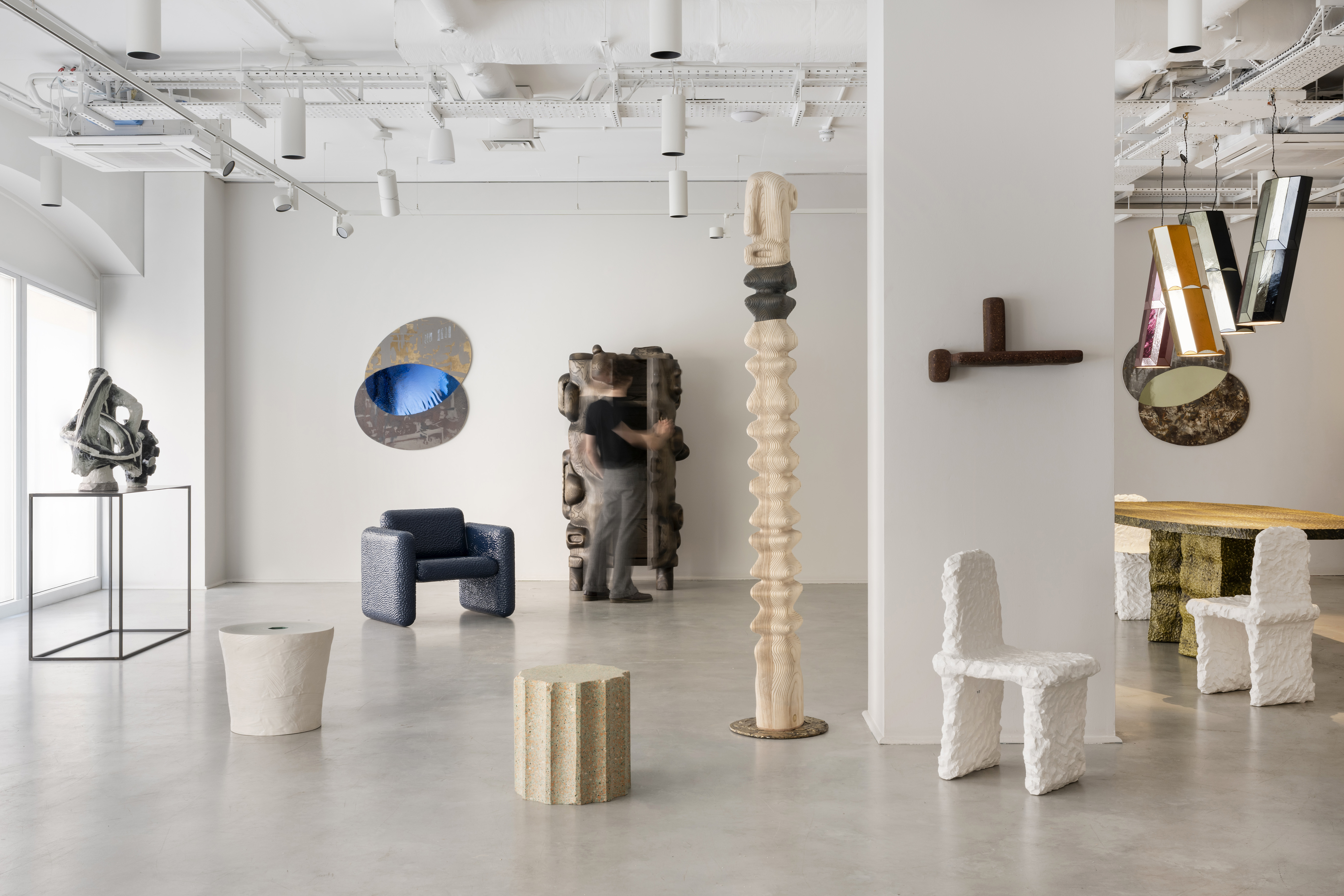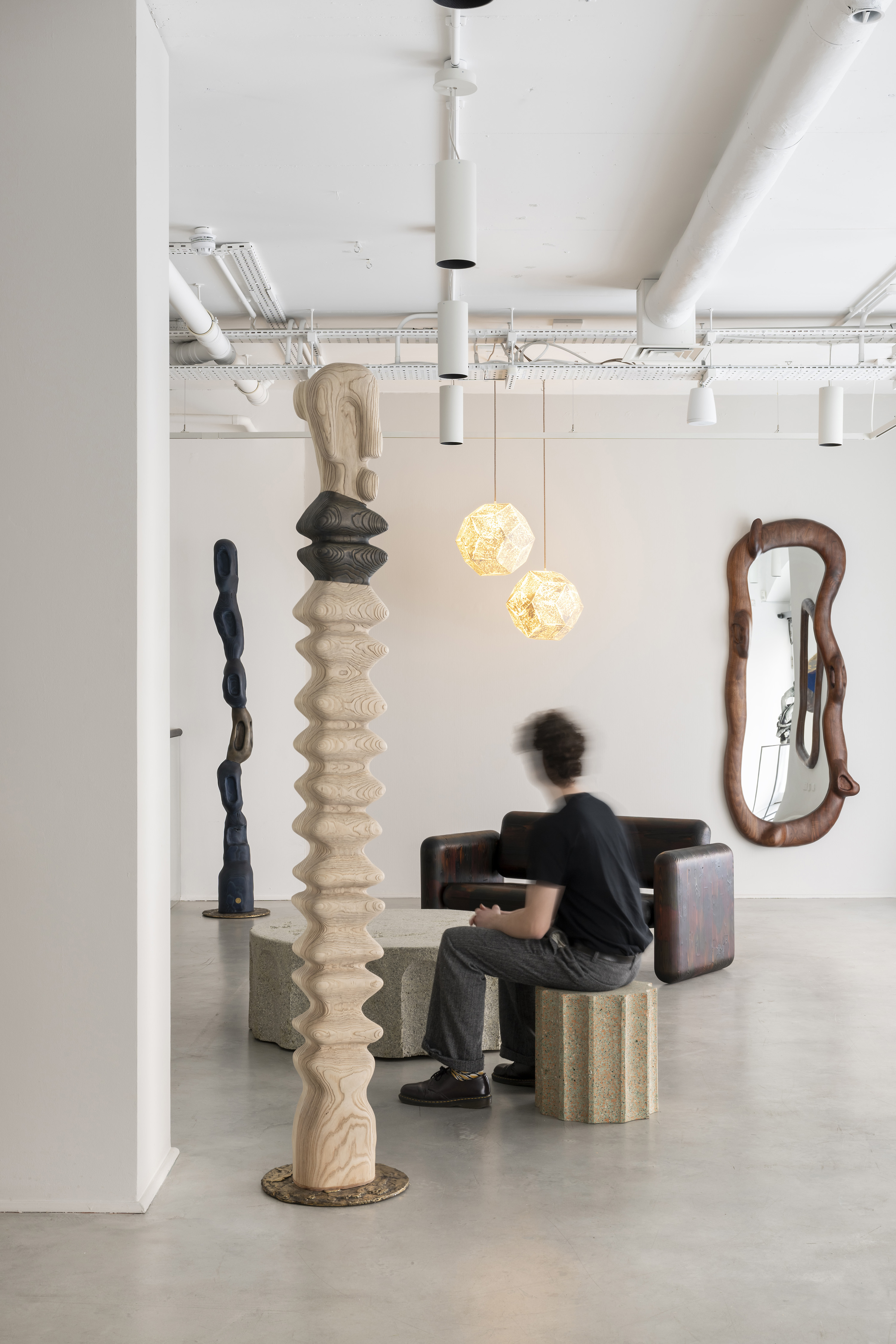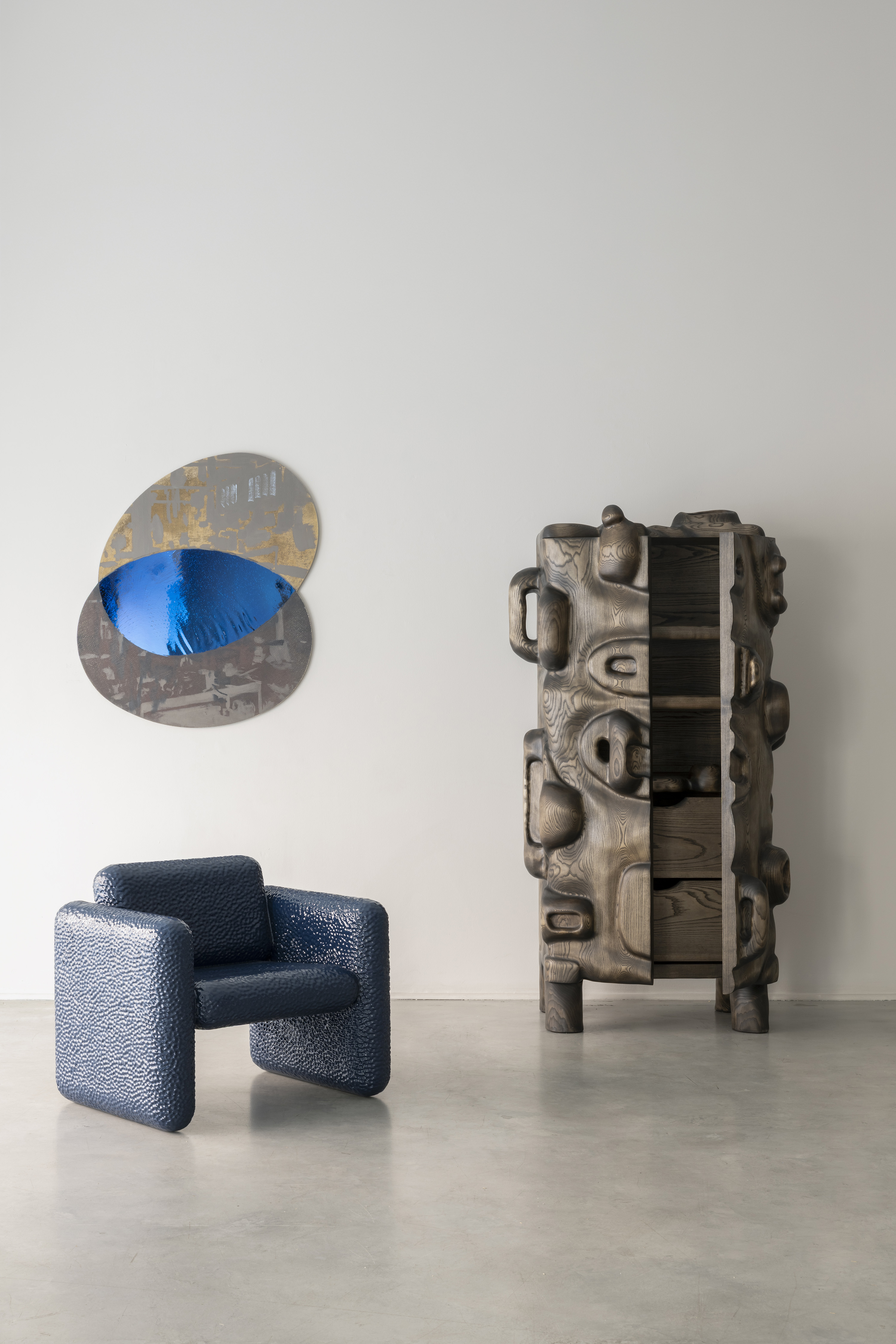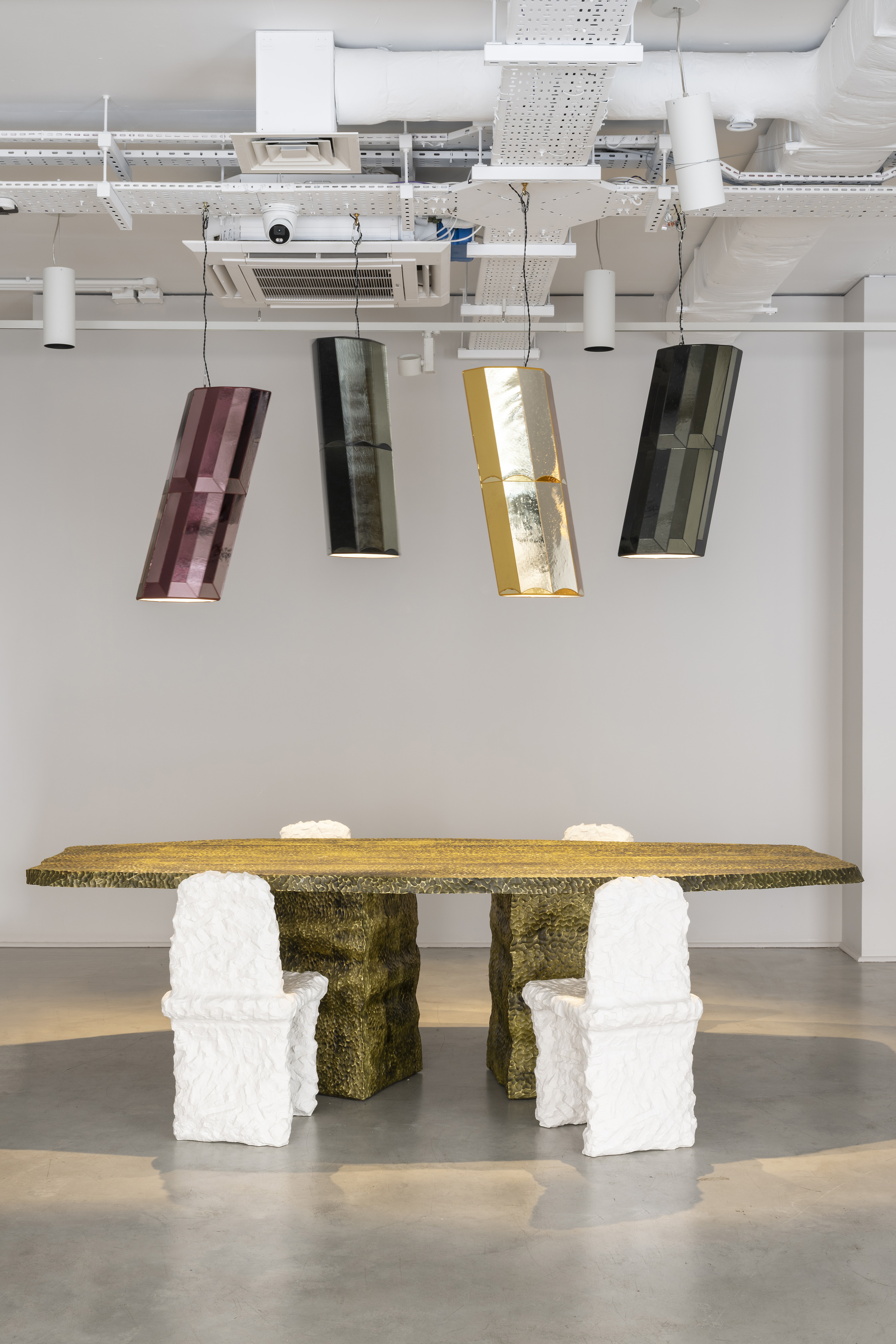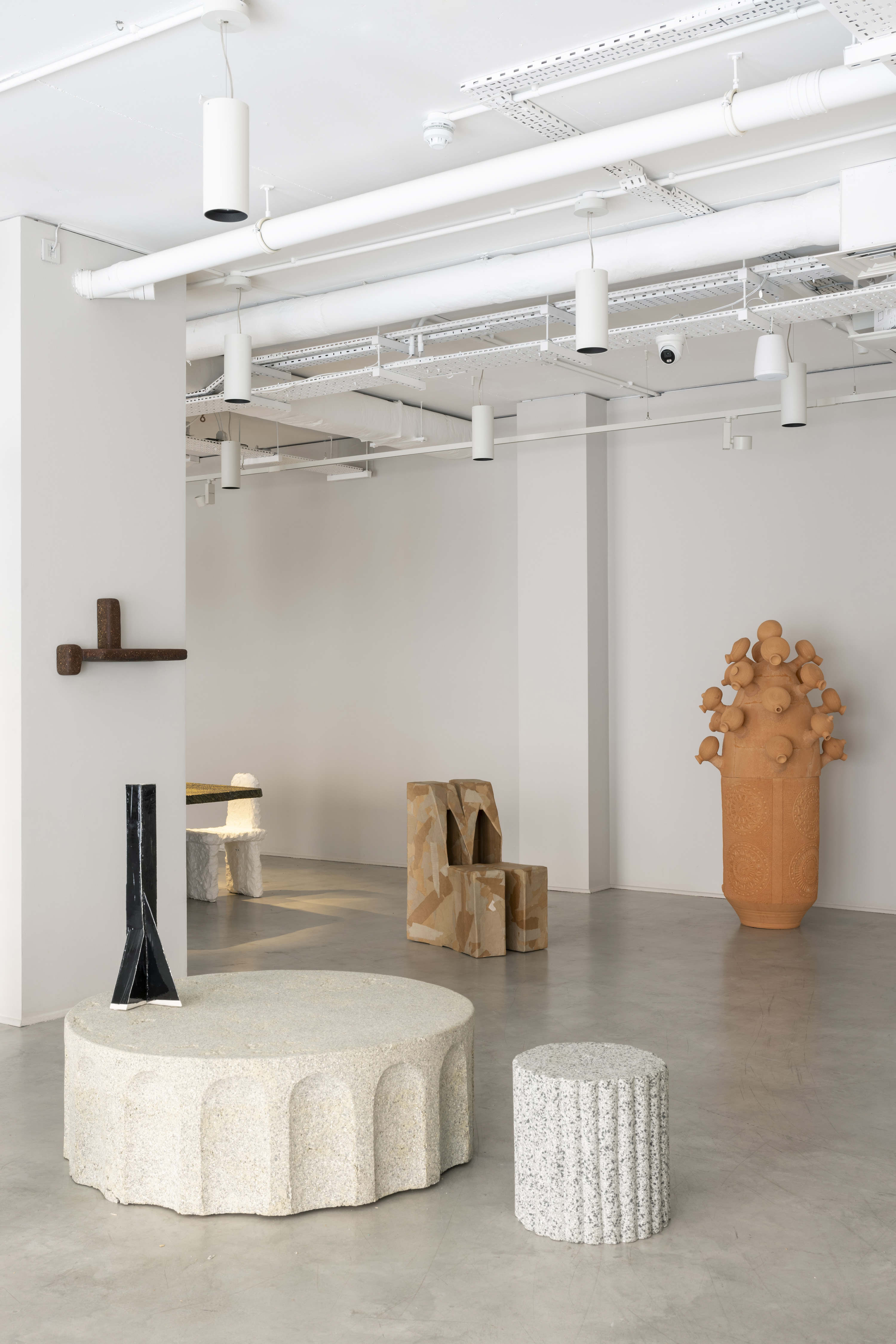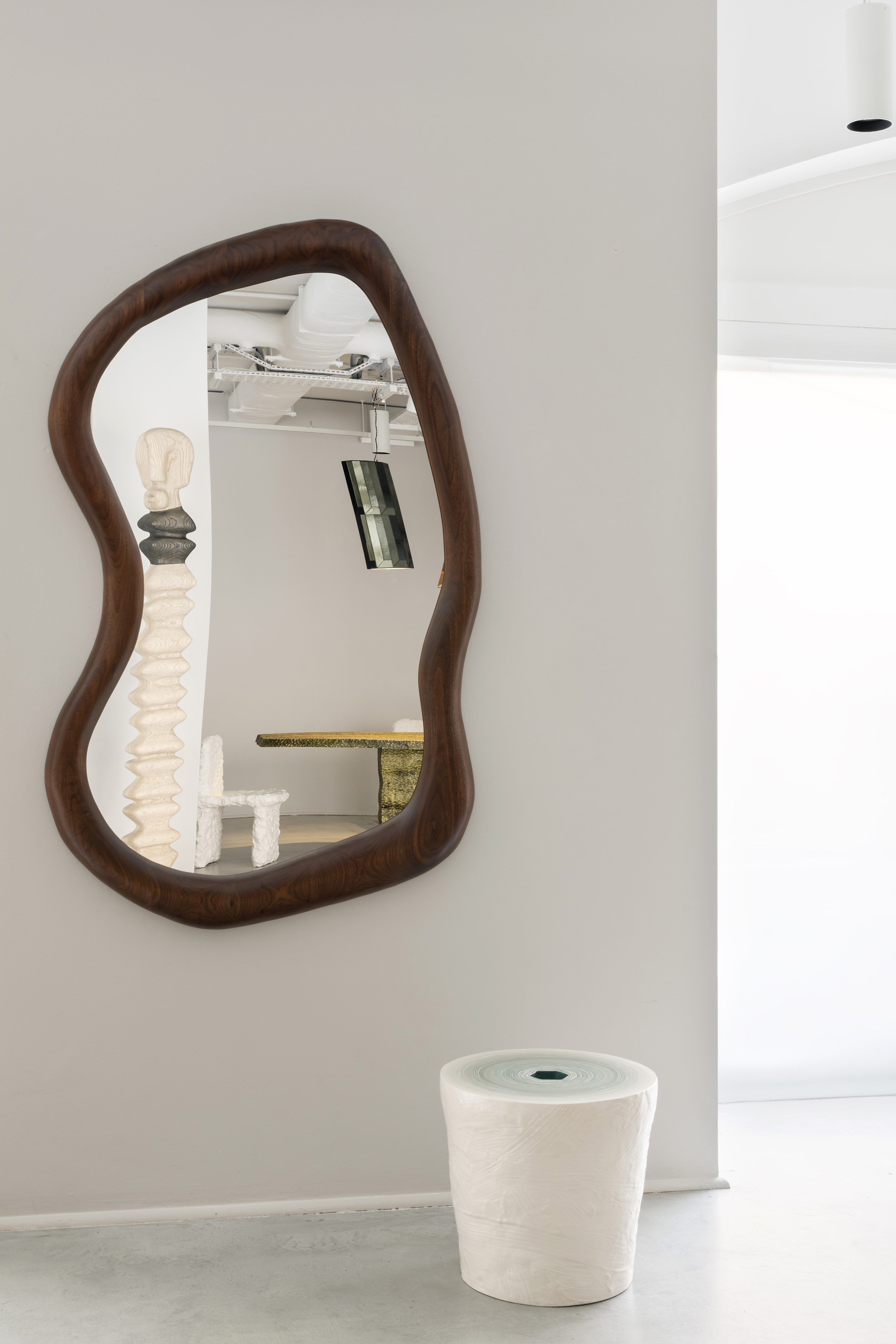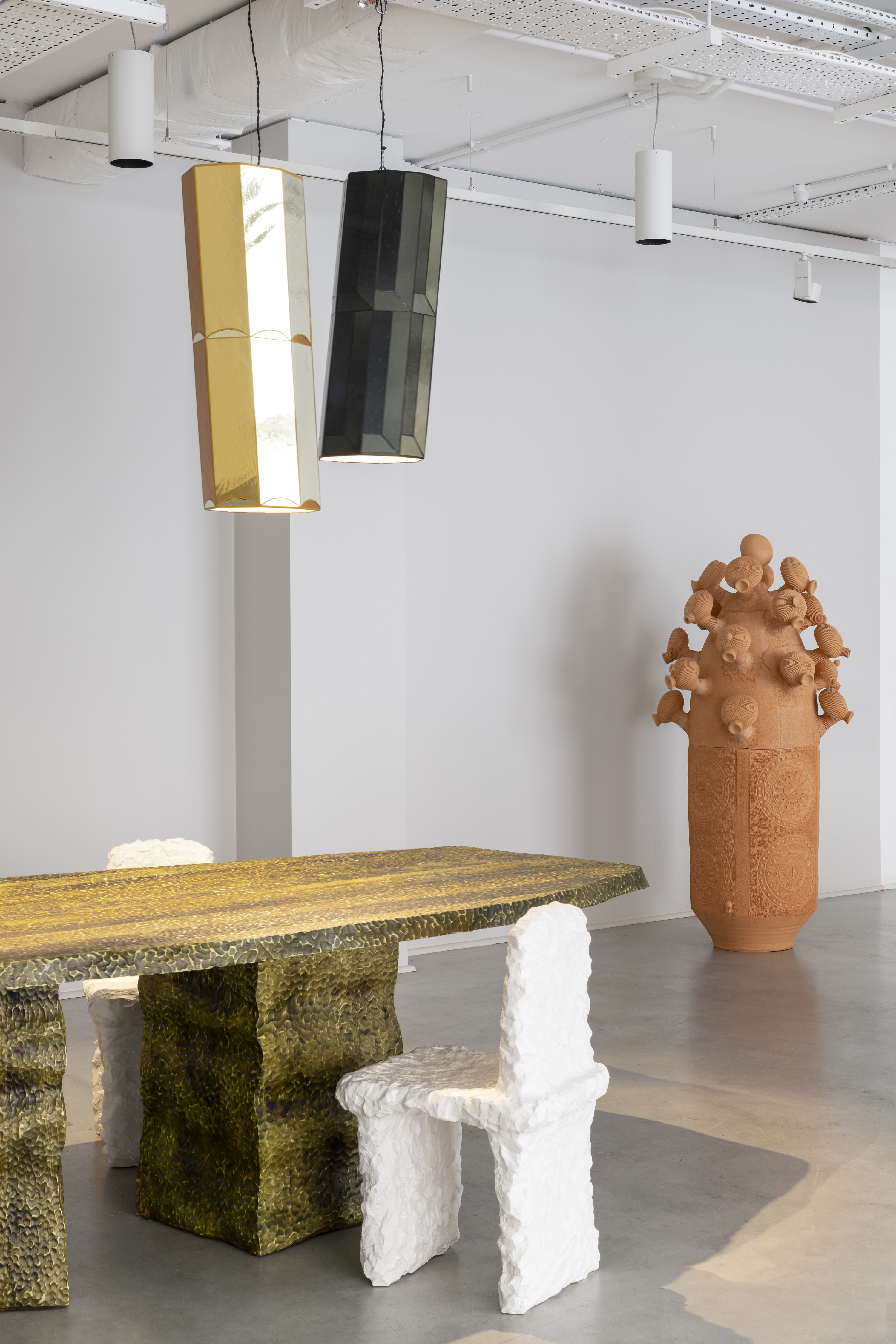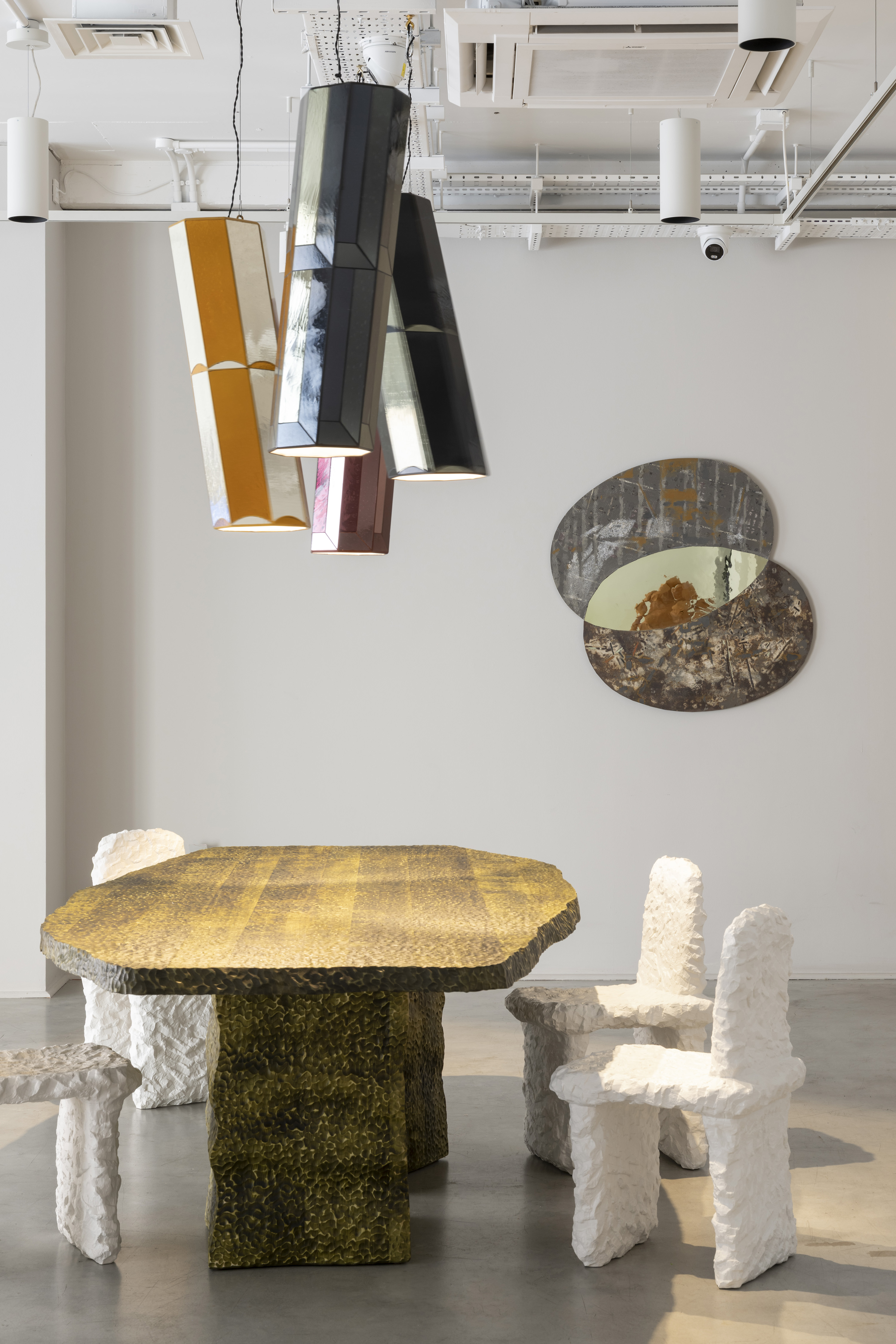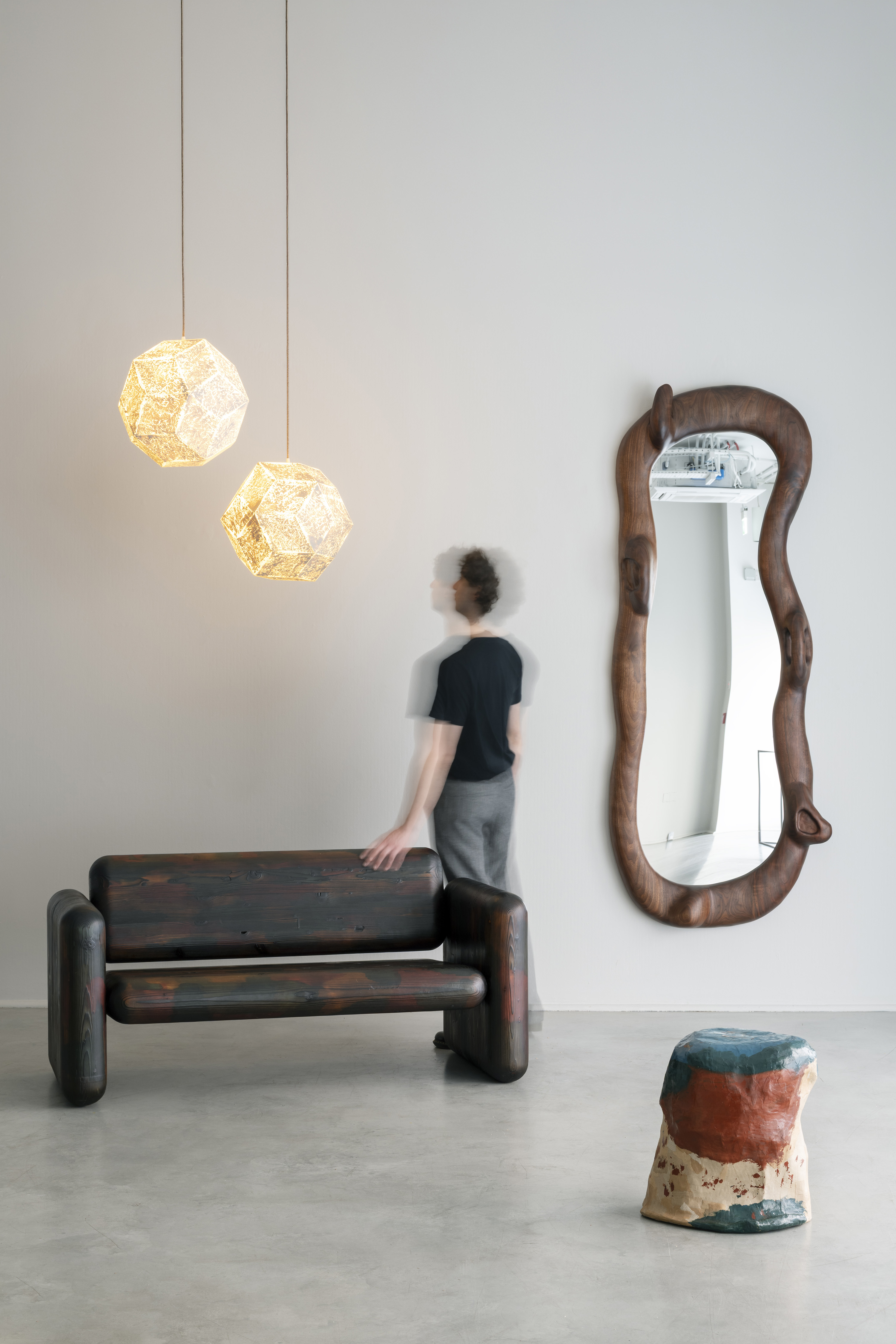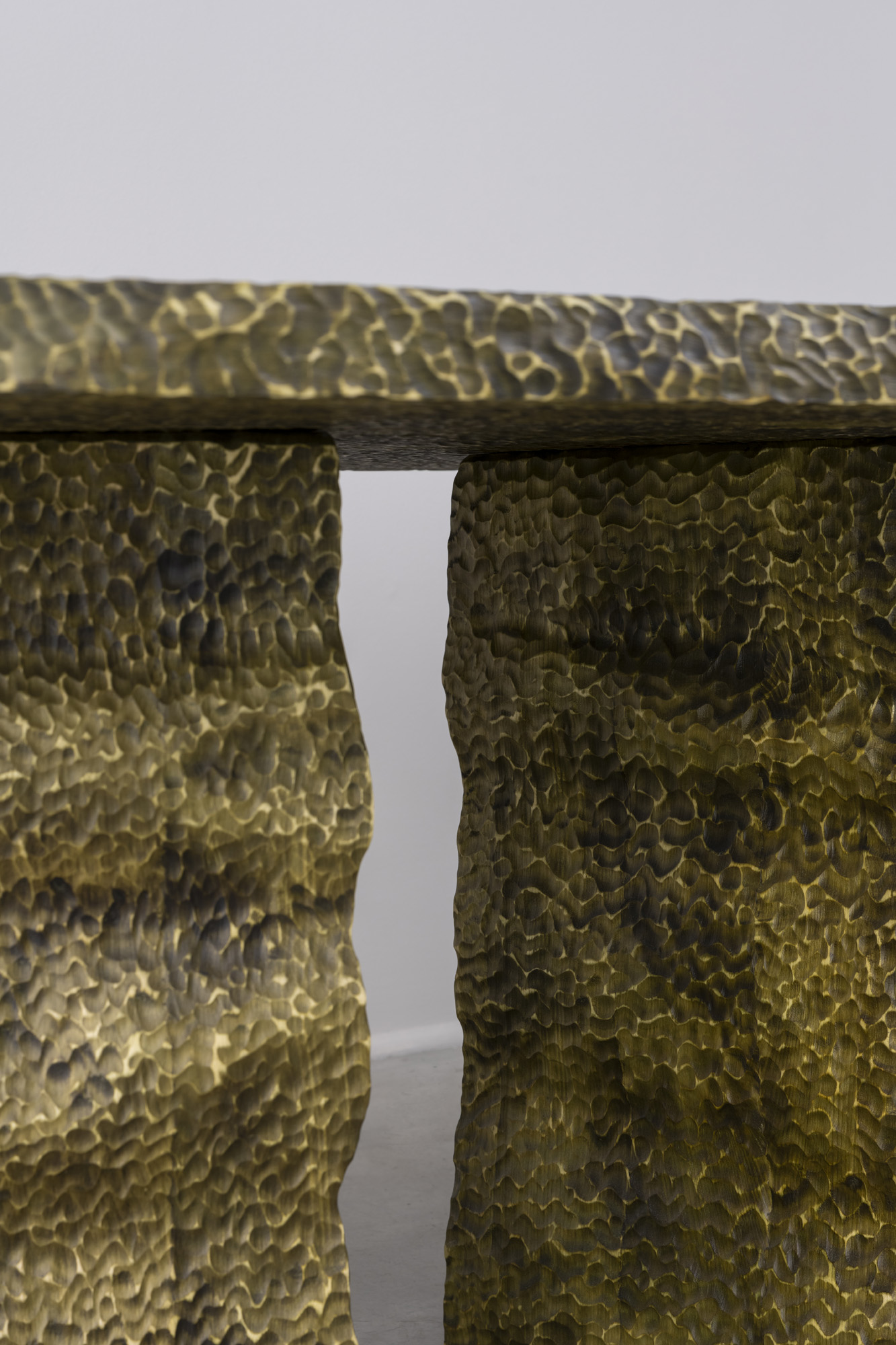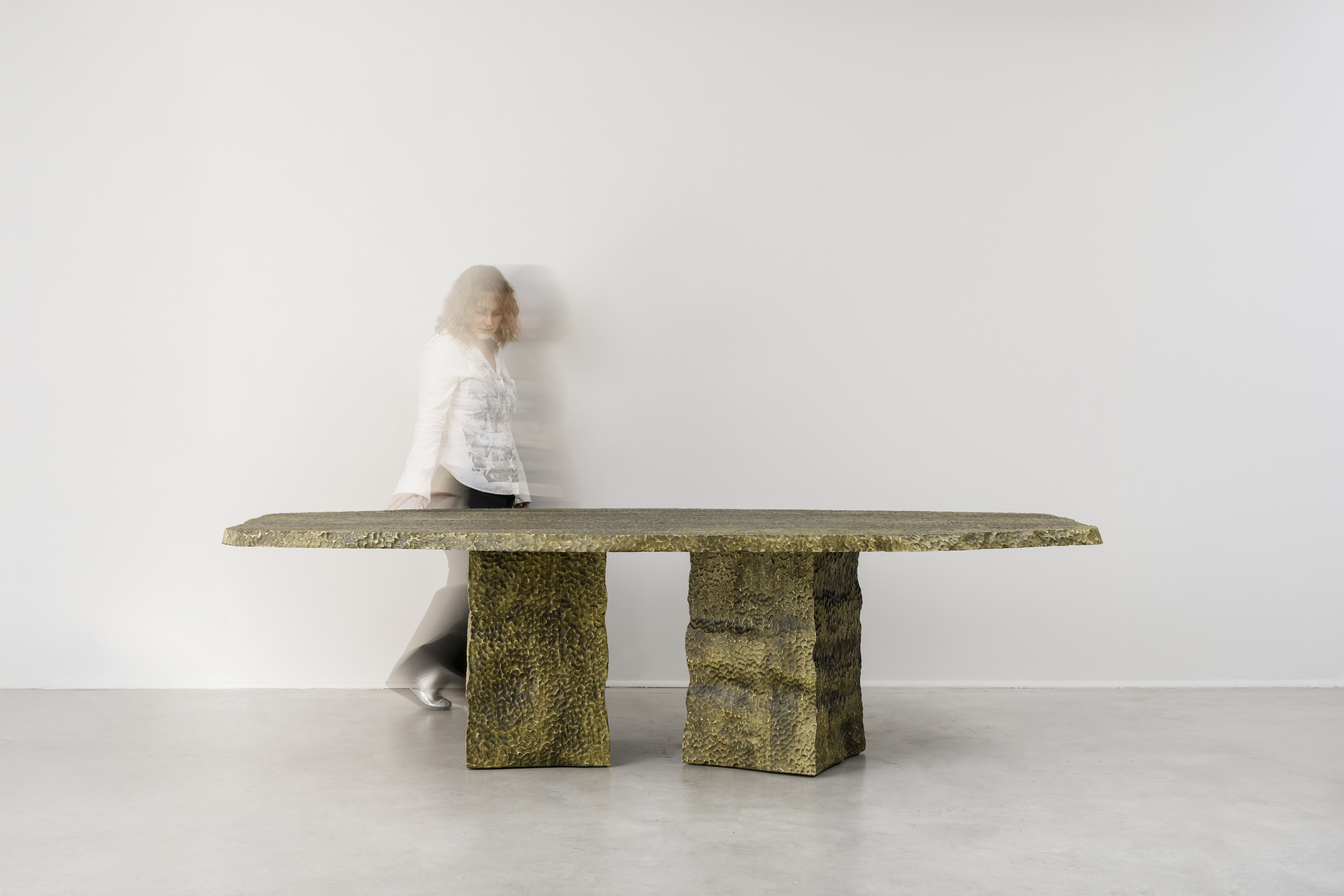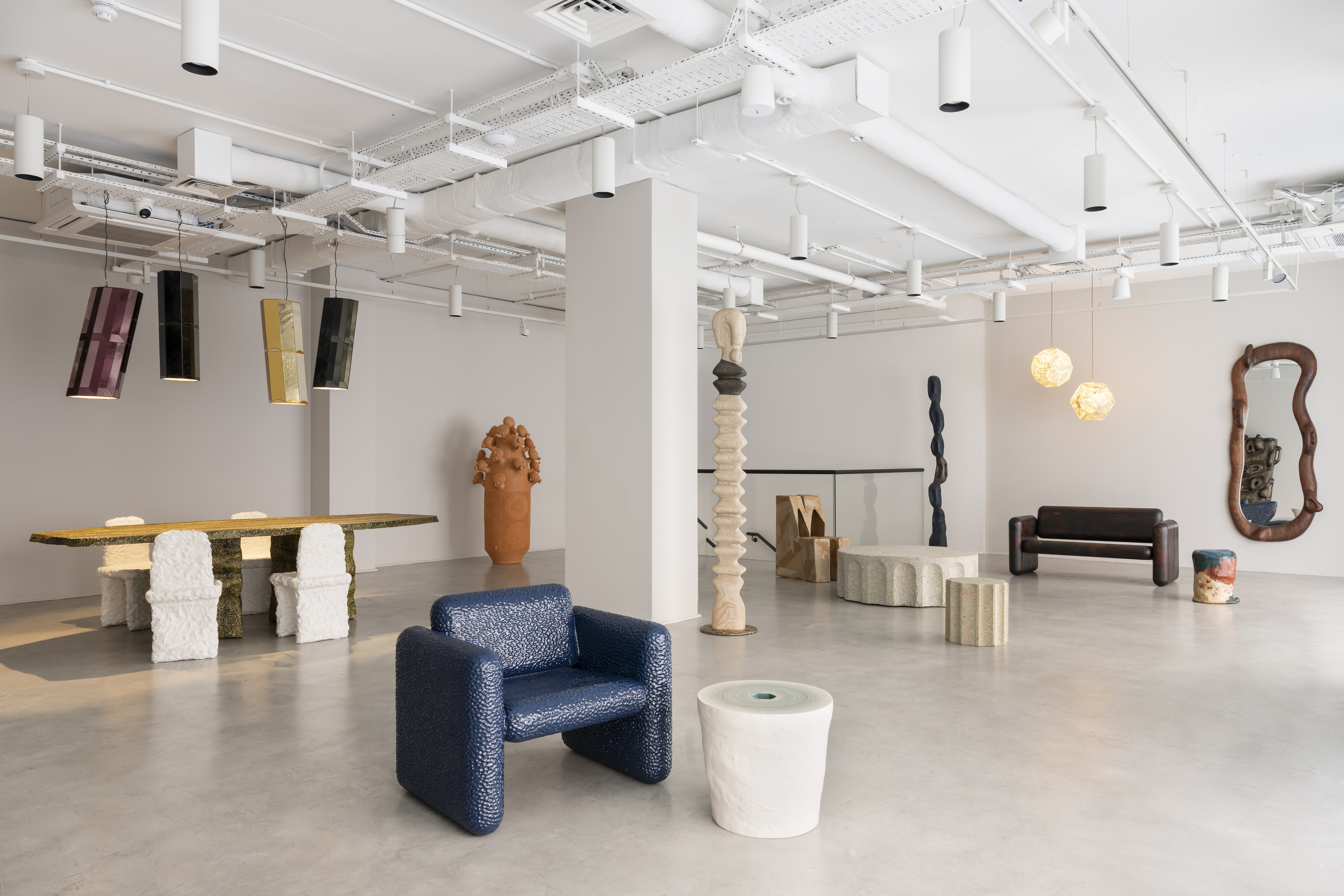
Gallery FUMI is delighted to present ‘The Function of Form’, a new exhibition centred around the ways our artists and designers experiment with the form of their materials. Each of the artists create new worlds through material interaction, whether this be spiritual, practical, or decorative. They distinguish themselves from each other in myriad ways, with one important link between them: their use in our lives.
The works encompass an enlivened awareness of the wider possibilities of form in design, challenging traditional ideas about what it means for a work to be ‘functional’.
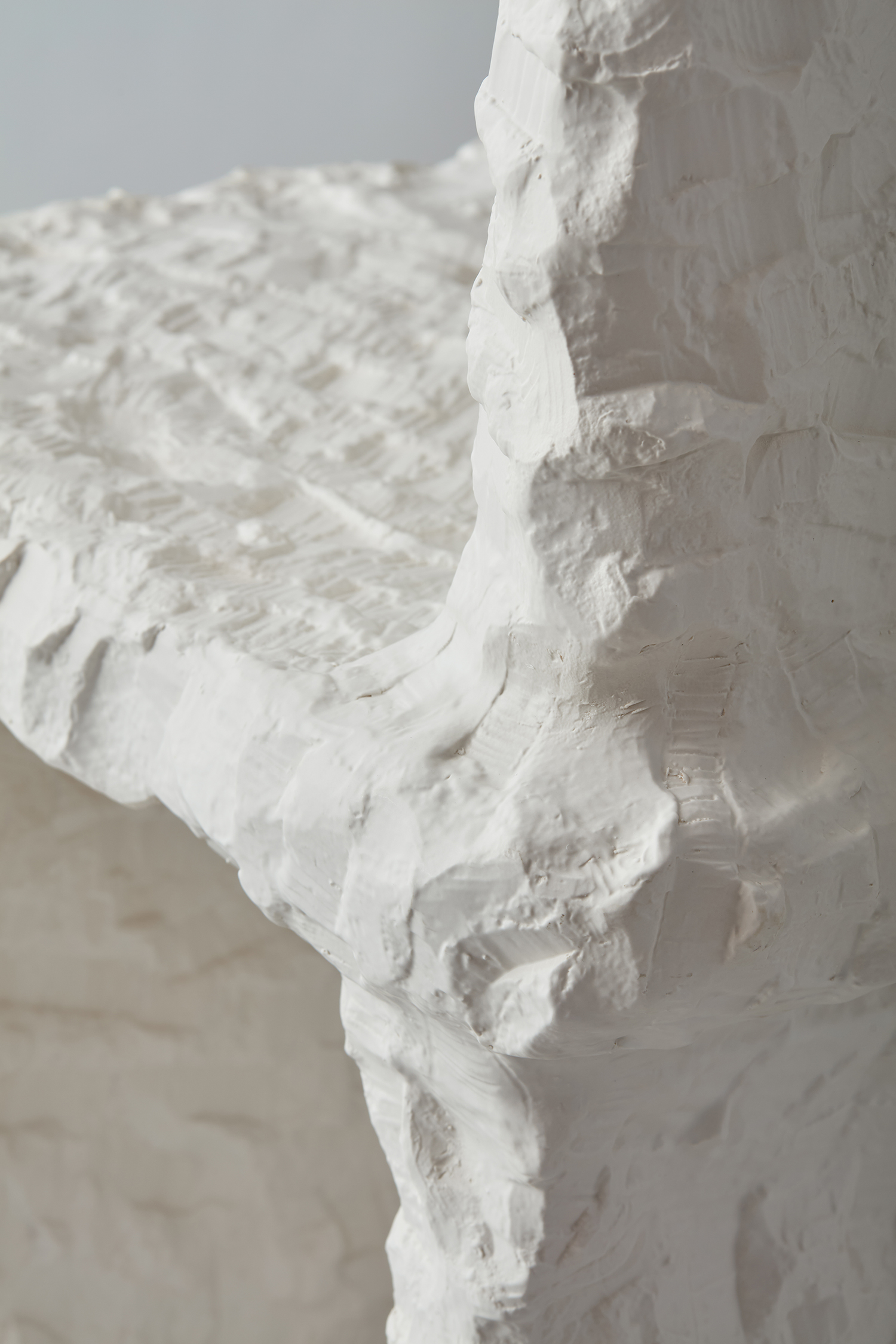
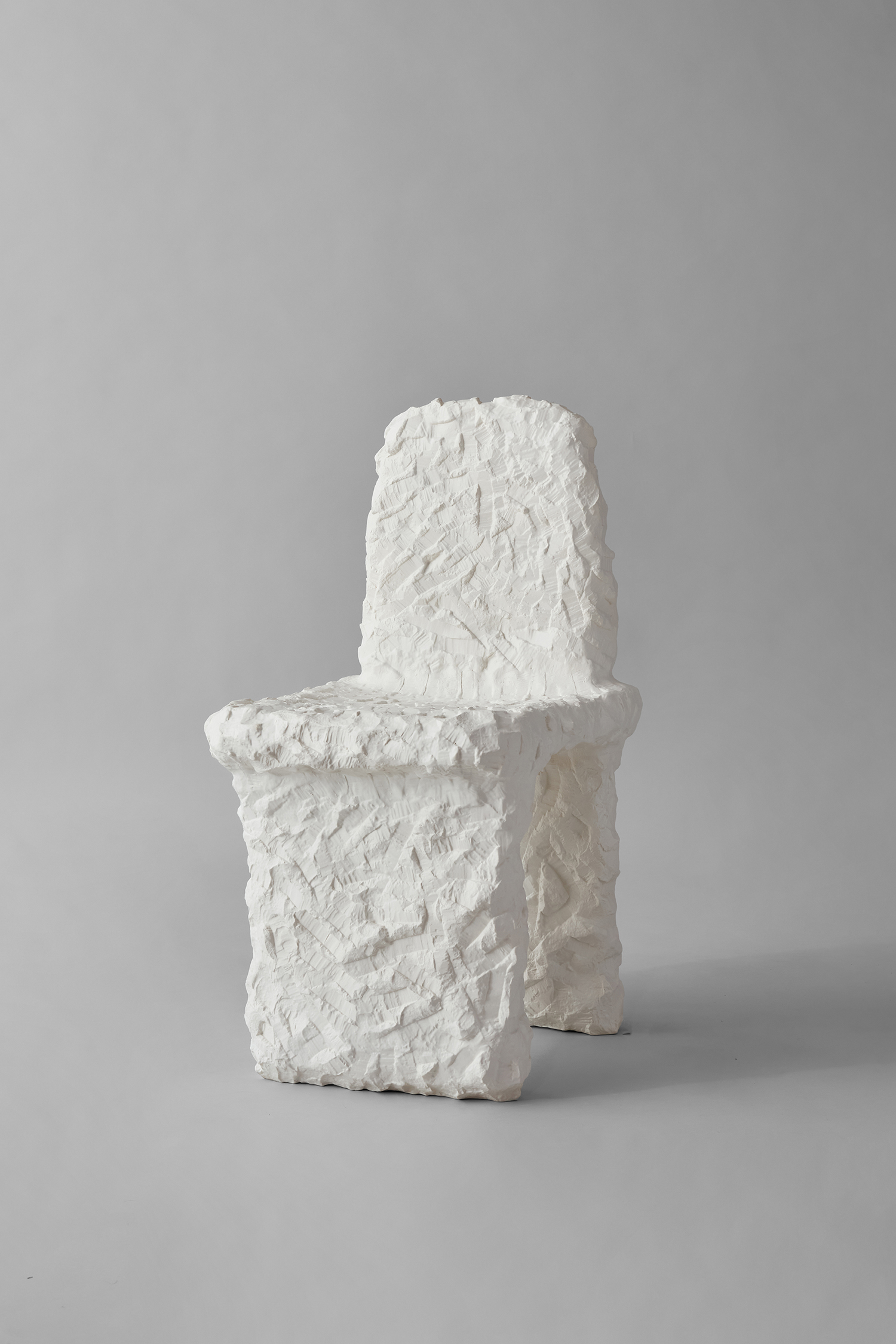
When you consider the breadth of different materials and the plethora of different production methods and processes, function becomes a fluid language subject to the limit of a material’s possibility. Max Lamb embodies this through his works in wood, ceramic, and cardboard boxes, extending his polymathic understanding of material to its limit while always putting the human at the centre of his practice.
The hallmark of Sam Orlando Miller’s practice is an experimentation with light, form, and space. He navigates between the history of his practice, which runs through his family, and the contemporary ways he can shape not just his craft, but the environment around it.
Kobina Adusah’s vessels and large-scale sculptural forms act as carriers of inherited knowledge, shaped by personal lineage and collective experience, exploring the spiritual function objects possess in our life.
Casey McCafferty gives wood an unusual freedom of depth laden with abstract figuration and an expansive narrative informed by natural and ritualistic forms, while Carlés and Demarquet explore how the natural world and human craft collide, conjuring a meeting place of myth, ritual, and ecology in a time-washed, tactile harmony.
Ceramicist Johannes Nagel’s vessels are made by burrowing channels in sand before pouring in the clay, achieving spontaneous, organic forms as it sticks to the contours made by the submerged gestures. In his work, the line blurs between functional pottery and objets d’arte, challenging the function, form, and meaning of traditional vessels and their decoration.
Study O Portable exhibit an expansive architectural vocabulary with their Rubber Rocks and Fuzz series, exploring the tension between permanence and impermanence, transformation and erosion in works with an unexpected materiality.
Each work seeks to put the embodied individual at the centre of its enquiries in affective, spiritual, and practical ways.